






BPPV Physiotherapy Edmonton
BPPV Treatment Edmonton
Benign paroxysmal positional vertigo: assessment with video goggles, repositioning manoeuvres such as the Epley, and a plan if it comes back
What Is BPPV Treatment?
Sudden spinning when you roll over in bed, lie down, look up, or change your head position may be a sign of benign paroxysmal positional vertigo (BPPV). This common inner-ear condition occurs when small calcium crystals become displaced and affect the signals responsible for balance. BPPV Treatment in Edmonton may involve a detailed assessment, positional testing, and appropriate repositioning techniques to address the displaced crystals. A physiotherapist can help identify whether BPPV is contributing to your symptoms and guide you through suitable treatment based on your condition.

What BPPV is
Benign paroxysmal positional vertigo. Tiny calcium carbonate crystals (otoconia) that normally sit in one part of the inner ear become dislodged and drift into one of the semicircular canals, most often the posterior canal. When your head moves into certain positions, the crystals move, the canal sends a false signal of rotation to the brain, and you experience a short burst of spinning. It is benign in the sense that it is not dangerous, but it can be frightening and disabling.
Common causes
- Often no clear cause, particularly over age 50
- Head injury or whiplash, including sports concussion and motor vehicle accidents
- Prolonged bed rest or lying in one position
- Inner ear infections or Meniere’s disease
- Previous BPPV: recurrence within a few years is common
Symptoms
- Spinning vertigo lasting seconds to under a minute, triggered by position change
- Classic triggers: rolling over in bed, lying down, sitting up, looking up, bending forward
- Nausea, unsteadiness and a lingering “off” feeling between episodes
- No hearing loss, ringing or ear fullness, which point to other conditions
When to get assessed
As soon as it is interfering with sleep, driving or daily life. Physiotherapists trained in vestibular rehabilitation can diagnose BPPV in the clinic with positional testing and, for most cases, treat it the same day.
Red flags
Vertigo with severe headache, double vision, slurred speech, weakness or numbness, difficulty walking, hearing loss, or vertigo that is constant rather than positional should be seen by a physician or emergency department first to rule out stroke and other causes.

How we treat BPPV at In Step
Assessment starts with your history, which is often diagnostic on its own, followed by positional tests such as the Dix-Hallpike and roll test. We use infrared video goggles (Frenzel goggles) to observe the specific eye movements that tell us which canal is affected and on which side, because the manoeuvre depends on it.
Treatment is a canalith repositioning manoeuvre matched to the canal: the Epley or Semont manoeuvre for posterior canal BPPV, the BBQ roll or Gufoni for horizontal canal. The manoeuvre moves the crystals back where they belong. Many people feel substantial improvement immediately; some need a second or third session, and a small number need a longer vestibular rehabilitation program for residual dizziness and unsteadiness.
We teach you what to expect afterwards, when to return, and, for recurrent cases, a self-treatment manoeuvre you can use at home once we have confirmed the affected side.
Common Symptoms of BPPV Treatment
Older adults most often, but also athletes and drivers after head impact, and anyone after a period of bed rest or illness.
After head impact
- Concussion in hockey, football, rugby and skiing
- Whiplash and head strike in motor vehicle accidents
- Falls, including in older adults
Other groups
- Adults over 50 with no clear trigger
- After prolonged bed rest, surgery or illness
- People with previous episodes of BPPV
What Causes BPPV?
BPPV usually responds quickly. Residual unsteadiness can take longer and responds to vestibular rehabilitation exercises.
Typical timelines
- Most posterior canal BPPV: resolved in one to three visits
- Horizontal canal or multi-canal BPPV: may take a few more sessions
- Residual dizziness or imbalance: a few weeks of vestibular exercises
These are typical ranges, not guarantees. Recurrence within a few years is common and is treated the same way.
What we look for before discharge
- Negative positional testing on the affected side
- Return to rolling, lying down and looking up without vertigo
- Steady walking and turning
- A plan and a self-treatment manoeuvre if it recurs
What to Expect During BPPV Treatment
- Assess the cause – Identify the source of your dizziness.
- Perform targeted tests – Check your symptoms and balance.
- Treat directly – Use appropriate repositioning techniques for BPPV.
- Reassess your symptoms – Check how you respond after treatment.
- Practice safely – Receive guidance for movement and balance.
- Leave with confidence – Understand what to do next and how to reduce the risk of recurring symptoms.
Dizzy when you roll over? BPPV is usually treatable in a visit or two.
Related Physiotherapy conditions Services
Pages you may also find useful.In Step Physiotherapy provides care for a range of conditions related to dizziness, balance, movement, and physical function. Our physiotherapy services may include BPPV treatment, vestibular physiotherapy, balance rehabilitation, and care for other musculoskeletal conditions. Each treatment approach is based on the individual’s symptoms, assessment, and needs.
Vestibular physiotherapy
Dizziness and vertigo
Balance and gait
Technologies and services we use in vestibular assessment
Infrared video goggles to observe eye movements, objective balance measurement, and brain-function measurement within concussion management, alongside hands-on care.

Frenzel Goggles
Assists in diagnosing dizziness and vestibular disorders, often caused by whiplash or concussion.
Is BPPV treatment covered by insurance?
Most extended health plans in Alberta cover physiotherapy, and we bill most insurers directly. No physician referral is needed to book.
Do I need a referral?
No. Physiotherapists in Alberta are primary-contact practitioners. Some insurers ask for a physician referral to reimburse; we can tell you whether yours does.
Which insurers do you bill directly?
Most major extended health providers. Call us before your first visit and we will confirm your coverage.
What if the vertigo started after a car accident?
BPPV after whiplash or head strike is common and is covered through the MVA insurer. We manage the paperwork.
Why patients choose In Step for dizziness
Downtown Edmonton since 2001, with physiotherapists trained in vestibular rehabilitation.
Vestibular-trained physiotherapists
Our lead physiotherapist completed vestibular rehabilitation training through Emory University and has more than 25 years of clinical experience.
Video-goggle assessment
Infrared goggles let us see the eye movements that identify the affected canal, so the manoeuvre is matched to the problem.
Same-visit treatment
For most posterior canal BPPV the repositioning manoeuvre is performed at the first appointment once the side is confirmed.
Direct billing, no referral needed
We bill most extended health insurers directly, and physiotherapists in Alberta are primary-contact practitioners.
Concussion and balance under one roof
If dizziness is part of a concussion or balance problem, the concussion management and balance programs are in the same clinic.
Ready to stop the spinning?
Book a vestibular assessment with a registered physiotherapist. No referral needed, direct billing to most plans.
What Our Patients Say About BPPV Treatment Edmonton

FAQs About BPPV Treatment Edmonton
Understanding BPPV
How do I know it is BPPV and not something else?
Short spinning triggered by position change, with no hearing symptoms, is typical. Positional testing with video goggles confirms it and identifies the canal. Constant vertigo, hearing changes or neurological symptoms point elsewhere and we refer on.
What is the Epley manoeuvre?
A sequence of head and body positions that moves displaced crystals out of the posterior semicircular canal. It takes a few minutes and is performed by a trained clinician after the affected side is confirmed.
Can I do the Epley manoeuvre at home?
Only after the affected canal and side have been confirmed, because doing it on the wrong side can move crystals into another canal. We teach a home version where appropriate.
Will I feel dizzy during treatment?
Usually yes, briefly. The manoeuvre provokes the vertigo as the crystals move. It passes within a minute.
Does BPPV go away on its own?
It can, over weeks to months, but treatment typically resolves it in days and reduces the risk of falls in the meantime.
Treatment and recovery
Do I need medication?
Anti-dizziness medications do not fix BPPV and can slow recovery. Repositioning treats the cause. Discuss any medication with your physician.
Do I need a referral?
No. Physiotherapists in Alberta are primary-contact practitioners and we bill most insurers directly.
Can BPPV come back?
Yes, recurrence is common. If it does, book again; treatment is the same and usually just as effective.
How long is the first appointment?
Typically 45 to 60 minutes, including assessment, the repositioning manoeuvre and instructions for afterwards.
Is it safe to drive after treatment?
We recommend having someone drive you to the first appointment, as testing and treatment provoke vertigo briefly.
Physiotherapists Who Help With Dizziness and Balance Problems

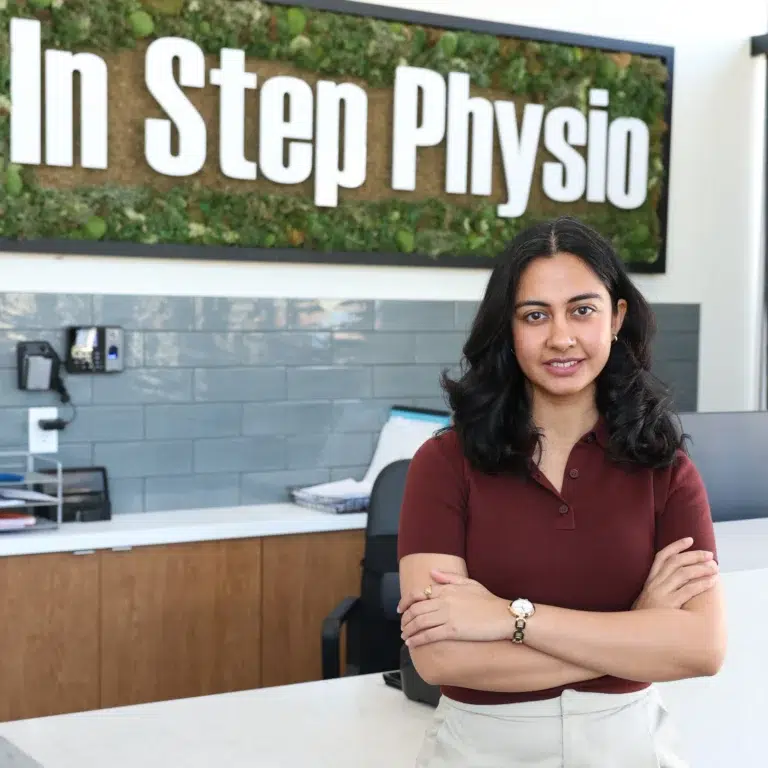



Our team is here to answer your questions and get you steady again
- Address - 10667 113 St NW, Edmonton, AB T5H 3H6
- Phone - (587) 409-1754
- Email - info@instepphysio.ca
- Business Hours - Mon – Fri: 8 am – 8 pm
- Business Hours - Sat: 8 am – 4 pm