We Are a Trauma Informed Edmonton Physiotherapy Practice Near You!Treating Clients in Edmonton for over 25 Years.Getting a Lymphatic Drainage Massage? Boost it with Shockwave Therapy for just $30!We Are a Trauma Informed Edmonton Physiotherapy Practice Near You!Treating Clients in Edmonton for over 25 Years.Getting a Lymphatic Drainage Massage? Boost it with Shockwave Therapy for just $30!







Physiotherapy Edmonton
Pediatric Physiotherapy Edmonton
Supporting children’s movement, growth, and daily participation through careful guidance
Get Consultation Now
Physiotherapy for Children in Edmonton
Building Strength, Coordination, and Confidence with Child-Centred Physiotherapy in Edmonton
A child learns the world through movement, from crawling and walking to running, jumping, and playing. At In Step Physiotherapy, we help families when those movements don’t come easily. Through pediatric physiotherapy Edmonton, our clinic offers movement-based care tailored to each child’s developmental needs, always in a child-friendly and encouraging environment. Our therapists utilize hands-on techniques, play-based exercises, technology-assisted tools, and parent coaching to help children develop confidence in mobility, coordination, and function. Whether the challenge is developmental, neurological, post-injury, or surgical recovery, we walk alongside your child toward greater independence.
What Does a Pediatric Physiotherapist Do at Our Clinic?
Pediatric Physiotherapy Edmonton at In Step Physical Therapy fulfill a wide range of roles and responsibilities, always focused on fostering movement, strength, and function in children. Their duties include:
- Conducting a detailed developmental and musculoskeletal assessment (e.g. observing posture, gait, balance, range of motion, muscle strength)
- Reviewing medical history, imaging, surgical reports, and growth information
- Collaborating with pediatricians, neurologists, orthopedic professionals, psychologists, speech therapists, and educators
- Establishing age-appropriate goals in consultation with the child and family
- Designing customized treatment plans with multiple techniques and progressions
- Monitoring progress, adjusting treatment plans over time
- Training caregivers and parents in home programs, transfers, safety measures, and handling strategies
- Advising families and schools about modifications, adaptive equipment, seating, and mobility devices
- Documenting outcomes, tracking changes, and communicating with referrals
These duties ensure that each child’s therapy is responsive to their evolving growth, challenges, and daily life demands.
Why Is Child Physiotherapy Important?
Physiotherapy for children is not simply “scaled-down adult therapy”; it addresses developmentally dynamic bodies and focuses on lifelong movement foundations. Some key reasons to use pediatric physiotherapy include:
Early intervention:
Addressing movement delays or impairments early often leads to better outcomes long term
Preventing secondary complications:
Muscle tightness, joint contractures, poor alignment, postural strain, or overuse injuries can be reduced
Supporting functional independence:
Helping children perform daily activities like dressing, walking, playing, and school tasks
Enhancing participation:
Improved mobility supports social, educational, and recreational participation
Recovery after injury or surgery:
Restoring strength, mobility, and safe movement patterns
Managing neurological or developmental conditions:
Cerebral palsy, developmental coordination disorder, muscle tone differences, genetic conditions
Respiratory support:
Assisting airway clearance or improving breathing mechanics in children with pulmonary challenges
Optimizing growth trajectories:
Guiding safe movement as bones, muscles, and joints develop
Because children grow and adapt, physiotherapy helps them stay on track, physically, socially, and emotionally.
Which Children Can Benefit from Our Services?
At our clinic, we offer Pediatric Physiotherapy Edmonton to support children with concerns related to movement, strength, posture, and development. Our therapists support children of all ages, including infants, toddlers, school-aged kids, and youth. Some of the common conditions and situations we address include:
Developmental & Neurological Conditions
- Delayed motor milestones (late sitting, crawling, walking)
- Developmental delay affecting gross or fine motor skills
- Cerebral palsy
- Down syndrome and other genetic conditions
- Autism spectrum-related motor challenges
- Pediatric neurorehabilitation
- Pediatric stroke recovery
- Developmental disability
- Neuromotor disorders
- Torticollis (tight neck muscles)
- Head shape concerns (plagiocephaly)
- Tip-toe walking, in-toeing gait, bowed legs
- Juvenile idiopathic arthritis
- Scheuermann’s disease
- Hip dysplasia
- Clubfoot or clubfeet
Orthopedic & Musculoskeletal Conditions
- Pediatric concussion management
- Orthopedic injuries (fractures, dislocations, sprains, strains)
- Ligament sprains and muscle strains
- Wrist sprain, ankle sprain, and foot injuries
- Anterior knee pain and patellofemoral issues
- Overuse injuries, such as shin splints and tendonitis
- Growth-related injuries (Sever’s disease, Osgood-Schlatter’s, Little League elbow)
- Scoliosis management
- Postural dysfunction and poor alignment
- Post-surgical rehabilitation and recovery support
- Joint pain and stiffness
Sports & Activity-Related Concerns
- Kids’ sports injuries (trauma or overuse)
- Agility and strength-endurance training
- Balance and coordination training
- Gross and fine motor training for school, play, and sports
- Functional activities training for daily life
- Activity modification training for safe participation in hobbies or athletics
- Movement analysis and range of motion assessments
Respiratory & Medical Support
- Breathing and airway clearance techniques for chronic lung conditions
- Rehabilitation after prolonged immobilization or hospitalization
- Support for children with chronic illness affecting endurance or mobility
Differently-Abled Children
- Movement activities and therapy adapted for children with unique physical abilities
- Customized strategies for mobility, independence, and participation in school and play
What Treatment Techniques Do We Use?
We assemble a toolbox of techniques, chosen, combined, and progressed based on each child’s needs. Techniques include:
Therapeutic exercise & strength training:
Progressive resistance, graded loading, functional strengthening
Gross motor training:
Crawling, stepping, hopping, running, jumping, obstacle negotiation
Fine motor and hand-eye coordination:
Activities to improve dexterity, drawing, buttoning, and manipulation tasks
Gait training & walking strategies:
Treadmill-assisted walking, overground gait training, balance aids, orthotic support
Neuromotor retraining:
Re-educating neural pathways for smoother, more coordinated movement
Manual therapy / soft tissue mobilization:
Gentle joint mobilizations, stretching, soft tissue techniques
Postural control & alignment training:
Core stability, midline control, spinal alignment
Play-based therapy:
Games, toys, obstacle courses, making therapy engaging and motivating
Balance and proprioceptive training:
Use of balance boards, stability surfaces, perturbation drills
Sensory-motor integration:
Assisting children in integrating vestibular, visual, and proprioceptive information
NeuroCatch® (neurophysiologic measurement):
Using EEG-based tools to monitor brain responses to stimuli and guide neurofeedback.
Virtual reality (VR) / immersive technologies:
Incorporating interactive games and virtual tasks to enhance engagement and motor learning.
Home exercise programs and carryover strategies:
Simplified, safe activities parents can support
Parent, teacher, and caregiver education:
Guidance on environment setup, safe transfers, handling techniques, and adaptive aids
By combining these techniques, our therapists adjust the intensity, duration, and progression to match each child’s tolerance and learning curve.
Movement Activities for Differently-Abled Children
When children have more complex movement needs, we adapt strategies to encourage safe, meaningful participation:
Supported stepping and standing:
Using harnesses, supportive devices, or physical assist to allow weight-bearing practice
Adaptive play stations:
Tailored surfaces, ramps, slides, sensory paths, obstacle courses
Sensory-motor drills:
Incorporating lighting, texture, and auditory cues to stimulate multisensory integration
Parallel movement tasks:
Where the child watches or mirrors the therapist’s movement, then imitates, gradually increasing complexity
Assistive technology & mobility devices:
Gait trainers, walkers, orthoses, wheelchairs, seating systems
Transfer training:
Safe transitions (floor to stand, chair transfers) with supports customized to the child
Functional repetition in natural contexts:
Embedding movement practice into play, school tasks, and real-life challenges
These activities foster confidence, movement adaptation, and increased participation.
How Does Our Clinic Structure a Pediatric Physiotherapy Journey?
When families come to In Step Physiotherapy, we guide them through a clear, supportive process designed around their child’s needs.
Initial Intake & Assessment
We begin with a detailed review of your child’s health history, growth patterns, and current challenges. Our therapists observe movement, posture, and motor skills, using standardized assessments when needed. We may also connect with other healthcare providers, such as pediatricians, occupational therapists, or teachers, to ensure a complete picture.
Goal Setting & Treatment Planning
Together with families, we set meaningful goals that matter to the child’s daily life, from walking independently to keeping up in play or school activities. Based on these goals, we design an individualized plan that incorporates techniques such as therapeutic exercise, manual therapy, virtual reality, or neuromotor training, along with a schedule tailored to your child’s needs.
Therapy Sessions & Interventions
Sessions are active, playful, and engaging, using age-appropriate techniques to build strength, mobility, and coordination. We reassess frequently, track progress, and adjust strategies as needed. Tools like NeuroCatch®, VR, and hands-on therapy may be included to keep sessions both practical and motivating.
Home Program & Carryover
To make therapy part of everyday life, we provide simple home exercises, movement games, and activity suggestions. Parents and caregivers receive guidance on safe positioning, handling, and ways to encourage practice at home.
Review, Progression & Discharge Planning
As children grow and develop, we review their milestones and adjust the plan accordingly. Some families transition to less frequent visits, while others continue with maintenance or check-ins. Our goal is always steady progress, ongoing support, and confidence for the child and family.
Throughout, we involve parents, caregivers, teachers, and other professionals to support consistency and generalization of skills.
Psychology & How We Coordinate with It
While physiotherapy emphasizes movement, strength, posture, and gross motor skills, psychology (OT) focuses more on fine motor skills, self-care, sensory integration, and daily living tasks (feeding, dressing, play). At our clinic:
- We communicate and co-plan when children also attend OT
- We ensure that gross motor gains support OT goals (e.g. improved stability for handwriting)
- We coordinate schedules, share assessments and progress updates
- When needed, we embed some OT-like tasks (fine motor, manipulation) within physiotherapy sessions to complement OT work
This collaboration helps avoid duplication and ensures seamless support for the child.
Why Families Use Our Pediatric Physiotherapy
Families choose pediatric physiotherapy at In Step for multiple reasons:
- To address developmental delays or atypical motor development
- To support neurological conditions (e.g. cerebral palsy, developmental coordination disorder)
- To assist in injury or post-surgery recovery
- To manage respiratory or airway issues via breathing techniques
- To prevent secondary musculoskeletal issues like tightness, contractures, and poor posture
- To support functional independence and participation in daily life
- To improve balance, coordination, strength, and endurance
- To adapt movement strategies for differently-abled children
- To leverage emerging technologies (VR, NeuroCatch) for enhanced engagement
- To promote better motor learning and consistency, with family involvement
We aim to build lasting movement foundations.
Supporting Your Child’s Growth, One Step at a Time
At In Step Physiotherapy, we offer a thoughtful, evidence-informed, and child-centred approach to help children move more confidently, participate more fully, and grow with strength and coordination. Pediatric physiotherapy Edmonton supports children in developing essential motor skills, improving balance and coordination, and achieving functional independence. Through a blend of traditional hands-on techniques, modern tools, and a focus on family-driven carryover, we support each child’s journey in mobility, freedom, and joy.
Every child deserves the chance to move, play, and grow with ease. Contact us today to learn how we can help.
Reviews:

In step is the best place for all your physiotherapy needs. They use modern and advanced intervention techniques that are very effective. I started accessing instep services after suffering a stroke and I received top notch rehabilitation services and support. Initially I had stiff shoulders and had a hard time lifting my hands up above my shoulders. I also had pain in my left knee due to my stroke. By the end of my time with instep, I had seen tremendous improvement in my challenges and today I do not even recognize which part of my body had pain as before. All thanks to the AFC technology at instep which was crucial for relaxing my twisted and tense muscles. I had the best therapists at instep ELOISA and AMEE. Both are very pleasant and skilled therapists who are dedicated to the recovery of their patients. Big shout out to these two fine ladies and the rest of the staff at instep who work tirelessly for the smooth recovery of their clients. I would highly recommend instep to anyone seeking advanced physio services in Alberta. Good job instep.
Tendai Danha
I highly recommend this clinic. The staff is friendly and professional, and the physiotherapist was amazing. She really listened to my concerns and helped me recover quickly with clear exercises and guidance. Great experience overall.
Angela Baez
Wow, actually a nice place. Good service friendly, clean and good team working together I love it
Thank you to the In Step physio team! I will be coming back here any time I have issues or injuries with my body
Thank you so much team💕🙏
Abdirashid Tifow
I can confidently say that In step phsio therapy is the best physiotherapy clinic in town no one even comes close! From the moment you walk in, you’re greeted with warmth and professionalism. The staff is incredibly knowledgeable, caring, and attentive, making every session feel personalized and effective.
A special shoutout to Geri, the owner, who is not only an expert in physiotherapy but also one of the most compassionate and dedicated people I’ve ever met. Geri and the team genuinely care about their patients' well-being and go above and beyond to ensure the best results. Whether it’s injury recovery, pain management, or overall mobility improvement, they tailor treatments to fit your needs perfectly.
What sets them apart is their exceptional manner, techniques, and a welcoming atmosphere, that makes you feel like family. If you’re looking for top-tier physiotherapy with a team that truly cares, this is the place!
Thank you, Geri and the amazing team
Pam, Sheila ,The message trapist parakash , occpuncture Albert
, Gudrate, all the physio Trappist assistant ,you’re unmatched in this town !
Geri your not only heal our body , love to hear always your joke , bro you are a pro! Thank you !
Yohannes Mollaligne
Kidus Clean
From First Steps to Confident Moves: Pediatric Physio in Edmonton
At In Step Physiotherapy, we help children of all abilities move, play, and grow with confidence. Our pediatric programs in Edmonton build strength, coordination, and independence in a fun, safe, and engaging way.
Frequently Asked Questions:
1: General Questions About Pediatric Physiotherapy
What is pediatric physiotherapy?
It is a treatment approach that helps children improve movement, coordination, strength, and overall physical function through tailored exercises and activities.
At what age can children start physiotherapy?
Children can start physiotherapy at any age, including infancy, if developmental delays, injuries, or movement challenges are noticed.
How long does a typical session last?
Sessions usually last 30–60 minutes, depending on the child’s age, attention span, and the therapy plan.
How often should my child attend physiotherapy?
Frequency depends on the child’s needs, ranging from once weekly to multiple times per week, as recommended by the physiotherapist.
Is physiotherapy safe for children?
Yes, it uses age-appropriate techniques designed to support growth and development without causing harm.
Do children need a referral for physiotherapy?
Some insurance plans require a referral, but children can often be assessed without one, depending on the clinic.
What conditions does pediatric physiotherapy address?
It supports motor delays, orthopedic injuries, neurological conditions, post-surgical recovery, balance issues, and coordination challenges.
Can physiotherapy improve posture in children?
Yes, exercises and education help correct posture and support spinal, hip, and core development.
How do physiotherapists track progress?
Progress is monitored using objective measures like strength, balance, coordination, range of motion, and parent feedback.
Will physiotherapy involve medications?
No, it focuses on exercises, activities, and movement strategies rather than medications.
2: Neurological and Developmental Concerns
What is NeuroCatch?
NeuroCatch is a device that measures brain function through EEG-based recordings, helping track neurological responses in children.
How can NeuroCatch assist in pediatric therapy?
It provides objective data on brain activity, supporting therapy plans for attention, balance, and motor control improvements.
Can physiotherapy help children with cerebral palsy?
Yes, therapy can improve mobility, flexibility, strength, balance, and functional independence through individualized programs.
Is physiotherapy effective for children with ADHD?
Targeted movement activities can support attention, coordination, and self-regulation skills in children with ADHD.
Can children with Down syndrome benefit from physiotherapy?
Yes, therapy helps improve motor skills, balance, strength, and functional mobility in children with Down syndrome.
Does physiotherapy help with sensory processing issues?
Yes, certain exercises and movement-based activities support sensory integration and coordination.
Can physiotherapy support children with delayed walking?
Yes, through strength, balance, and gait training exercises designed to encourage safe walking development.
How does physiotherapy assist with developmental coordination disorder?
It focuses on improving motor planning, coordination, strength, and confidence in everyday tasks.
Can physiotherapy prevent scoliosis progression?
Targeted exercises may help improve posture and spinal alignment, potentially slowing scoliosis progression.
Do children with epilepsy need extra considerations in physiotherapy?
Yes, therapy is adapted to ensure safety, seizure management, and appropriate activity selection.
3: Orthopedic and Injury-Related Questions
Can physiotherapy help after fractures?
Yes, therapy restores range of motion, strength, and coordination after fractures or orthopedic injuries.
Are exercises painful for children after injury?
Exercises are adjusted to the child’s comfort and tolerance, focusing on gradual improvement rather than causing discomfort.
Can physiotherapy help with joint hypermobility?
Yes, exercises strengthen muscles around joints to improve stability and reduce injury risk.
Do children need physiotherapy after surgery?
Post-surgical therapy supports recovery, restores movement, and prevents muscle weakness or stiffness.
Can physiotherapy help with flat feet?
Yes, exercises and supportive devices can strengthen arches and improve foot alignment over time.
Are braces or orthotics part of therapy?
They may be recommended alongside exercises to support alignment, mobility, and function.
How does physiotherapy assist with sports injuries in children?
Therapy focuses on strength, flexibility, balance, and safe return to activities while preventing reinjury.
Can physiotherapy reduce growing pains?
Targeted exercises and stretches may ease discomfort and support healthy growth patterns.
How do physiotherapists address muscle tightness?
Through stretching, manual therapy, and movement exercises that improve flexibility and function.
Can therapy improve walking patterns in children?
Yes, gait training and coordination exercises can help correct abnormal walking patterns.
4: Virtual Reality (VR) and Technology-Based Therapy
How is VR used in pediatric physiotherapy?
VR engages children in games that promote movement, coordination, and cognitive skills in a controlled virtual environment.
Which devices are used for VR therapy?
Devices like MetaQuest 3 with hand controllers are used to immerse children in interactive movement exercises.
Is VR therapy safe for children?
Yes, sessions are supervised and designed to ensure safe movement and engagement without overexertion.
Can VR improve motor skills?
Yes, interactive VR games encourage precise movements, coordination, and reaction time improvement.
Can VR be used at home for exercises?
Some programs can be adapted for home use under guidance, ensuring proper technique and safety.
Does VR therapy replace traditional exercises?
No, VR complements traditional therapy, making exercises more engaging while supporting therapy goals.
How do therapists measure progress in VR therapy?
Progress is tracked using in-game performance metrics, movement accuracy, and functional improvements observed in sessions.
Can VR therapy help children with balance issues?
Yes, VR games are designed to challenge balance and safely while enhancing motor control and confidence.
Is VR suitable for children with neurological conditions?
Yes, VR can be adapted to meet the child’s abilities and therapeutic needs.
Do children enjoy VR therapy?
Many children find VR engaging, which helps maintain focus and consistency in therapy sessions.
5: Family and Lifestyle Considerations
Can parents participate in therapy sessions?
Yes, parents may be involved to learn exercises, support practice at home, and observing progress.
How can parents support therapy at home?
By following guided exercises, encouraging movement, and creating safe spaces for practice.
Are there group therapy sessions?
Some clinics offer group sessions for social interaction, coordination practice, and motivation.
How is therapy adapted for children with attention challenges?
Sessions use short, engaging activities, breaks, and playful approaches to maintain focus.
Does physiotherapy require particular equipment at home?
Basic household items are often sufficient, though specific tools may be recommended for targeted exercises.
How long before I notice improvements?
Results vary, but gradual changes in strength, coordination, and confidence are often observed within weeks.
Can siblings be involved in therapy?
Yes, siblings can join movement games or activities to encourage participation and motivation.
Are exercises safe during school hours?
Yes, exercises can be adapted to schedules and performed safely at home or in school settings.
What should we bring to the first session?
Comfortable clothing, shoes, any previous medical reports, and information about your child’s daily activity levels.
Can therapy address sleep or attention issues indirectly?
Yes, improved movement, coordination, and sensory regulation may positively influence sleep and attention patterns.
Caring Professionals for Little Movers
Helping children reach their fullest potential takes a team that understands their unique needs physically, emotionally, and developmentally.
Our pediatric-focused team includes professionals like Jade Eckl, who supports children with communication and social development, and Roopreet Kaur, who brings experience in pediatric physiotherapy and rehabilitation.

Giri Srinivasan
Pediatric Physiotherapist – Owner & CEO
Postgraduate Diploma in Neurodevelopmental Therapy, with over 28 years of experience working with pediatric patients.
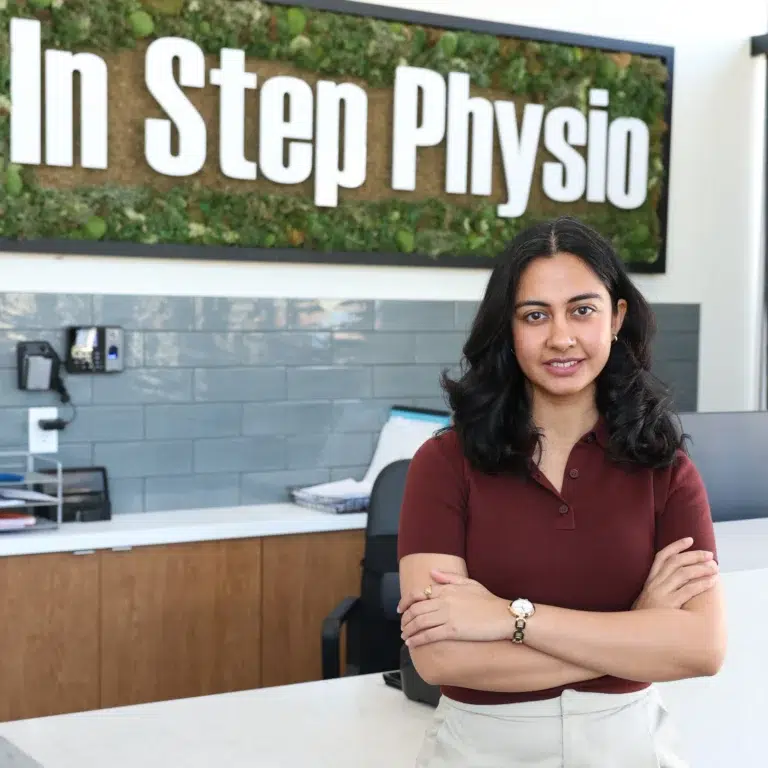
Roopreet Kaur
Pediatric Physiotherapist
Registered Physiotherapist. Roopreet works through assessment-led manual therapy and progressive exercise, with attention to how daily activity and posture affect symptoms.

Neha Anil Saraf
Pediatric Physiotherapist
Registered Physiotherapist. Neha combines hands-on techniques with individualised exercise programmes tailored to each patient’s goals.

Cyprian Orjinta
Pediatric Physiotherapist
Registered Physiotherapist. Cyprian focuses on restoring movement and strength through structured, progressive rehabilitation.
From physiotherapy to speech-language support, our therapists are committed to creating a fun, safe, and encouraging environment where kids can grow stronger, move better, and thrive every step of the way.
Our team is here to answer your questions and guide you through your next steps.
Book An Appointment
Reach Us
- Address - 10667 113 St NW, Edmonton, AB T5H 3H6
- Phone - (587) 409-1754
- Email - info@instepphysio.ca
- Business Hours - Mon – Fri: 8 am – 8 pm
- Business Hours - Sat: 8 am – 4 pm