






- Home
- Sports Physiotherapy
- Groin Strain
Groin Strain Physiotherapy Edmonton
Adductor strains, sports hernia and hockey groin: assessment, treatment and a return-to-play plan that holds
Get Consultation Now
Groin Strain Injuries in Edmonton Athletes
Groin strains are among the most common injuries we see in skaters, soccer players and sprinters, and among the most likely to recur when they are rushed. The adductor muscles on the inside of the thigh work hardest when you push off, change direction or kick, and once they are strained they need a plan, not just rest.

What a groin strain is
A strain of the adductor muscle group, usually where the adductor longus meets its tendon near the pubic bone. Strains range from mild over-stretching (grade 1) to partial tears (grade 2) and, rarely, complete tears (grade 3). Longer-standing groin pain in athletes may involve the tendon attachment, the pubic joint or the lower abdominal wall, sometimes called athletic pubalgia or “sports hernia”, which needs a different approach from an acute strain.
Common causes
- Sudden push-off or stride in skating, especially early in the season
- Kicking, cutting and sprinting in soccer, football and rugby
- Overstretching in a slip or a wide stance
- Weak or fatigued adductors and hip flexors relative to the load
- Previous groin injury that was never fully rehabilitated
Symptoms
- Sharp inner-thigh pain at the moment of injury, or a gradual ache that worsens with skating or kicking
- Pain squeezing the knees together or bringing the leg across the body
- Tenderness high on the inner thigh, sometimes bruising
- Pain with sit-ups or coughing suggests the abdominal wall is involved
When to get assessed
Early. A grade 1 strain assessed in the first week usually settles in two to four weeks; the same injury pushed through for a month often becomes a season-long problem. Book promptly if the pain limits your stride, if there is significant bruising, or if you have had the same groin go more than once.
Red flags
Severe pain with inability to walk, a visible gap in the muscle, numbness, or pain in the testicle or lower abdomen should be evaluated by a physician first to rule out a complete tear, a true hernia or other causes.

How we treat groin strains at In Step
We start with an evaluation and grading of the strain, checking the hip joint, the pubic region and the abdominal wall so that we treat the right structure. In the early phase, treatment focuses on settling pain and protecting the healing tissue: gentle loading, manual therapy and, where useful, dry needling or taping.
The middle phase is where recurrences are prevented. We progressively strengthen the adductors, hip flexors and trunk, and restore the ability to control the leg at speed and through range. For hockey players, this includes skating-pattern work and slide-board loading; for soccer players, kicking and cutting progressions. Objective strength testing tells us when the injured side has caught up with the other.
The final phase is a staged return to training and competition with criteria at each step, plus a maintenance program so the groin stays strong through the season.
Sports Commonly Associated With Groin Strains in Edmonton
Hockey and ringette lead by a wide margin, followed by soccer, football, rugby, dance and sprinting. Goalies are particularly exposed because of the hip position in the butterfly.
Ice sports
- Hockey: skating push-off, especially for goalies
- Ringette: pivots and straight-arm ring carrying
- Figure and speed skating: crossovers and deep positions
Field and studio sports
- Soccer and football: kicking, cutting and sprinting
- Rugby and lacrosse: contact and change of direction
- Dance and gymnastics: extreme range at the hip
Groin Strain Recovery and Return to Sport in Edmonton
Timelines depend on the grade, how early treatment starts and how consistently the program is followed.
Typical timelines
- Grade 1: usually two to four weeks to sport
- Grade 2: typically four to eight weeks
- Grade 3 or long-standing pubic and abdominal-wall pain: months, and occasionally a surgical opinion
These are ranges, not promises. Your physiotherapist will give you an estimate after assessment and adjust it as you progress.
Return-to-play criteria we use
- Pain-free squeeze test and full range of hip motion
- Adductor strength within about ten per cent of the other side
- Pain-free sprinting, cutting and sport-specific tasks
- Full training tolerated before competition
How We Approach Sports Injuries At In Step
Understand the athlete, measure what matters, treat with intent and progress against criteria.
Ready to get this sorted? Start with an assessment.
Related injuries and treatments
Pages you may also find useful.
Hip pain and impingement
Sports physiotherapy hub
Hamstring injuries

Technologies and services we use in sports rehabilitation
Objective measurements that change decisions: wearable movement sensors, brain-function measurement in concussion management, neuromuscular stimulation and virtual-reality rehabilitation, alongside hands-on care.
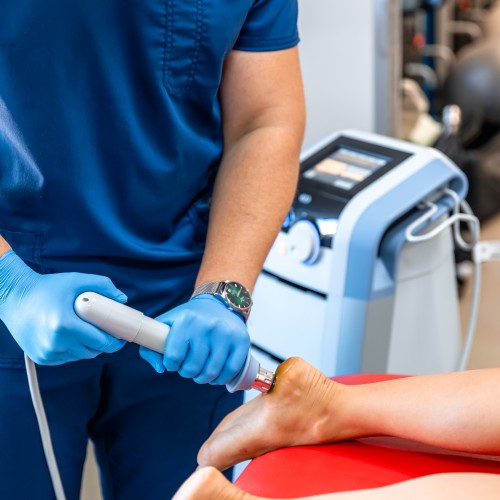
Shockwave Therapy
Breaks down scar tissue, reduces chronic pain, and promotes faster tissue repair.
Is treatment covered by insurance?
Most extended health plans in Alberta cover physiotherapy, and we bill most insurers directly. No physician referral is needed to book, though some insurers ask for one to reimburse claims.
Do I need a referral?
No. Physiotherapists in Alberta are primary-contact practitioners. Some insurers ask for a physician referral to reimburse; we can tell you whether yours does.
Which insurers do you bill directly?
Most major extended health providers. Call us before your first visit and we will confirm your coverage.
What if the injury happened at work or in a car accident?
Work injuries are handled through WCB and car-accident injuries through the MVA insurer. We manage the paperwork in both cases.
Why patients choose In Step Physical Therapy
Downtown Edmonton since 2001, with a team that treats sport and work injuries every day.
Experienced, credentialed team
Our lead physiotherapist has more than 25 years in orthopedic and sports rehabilitation, with FMS, SFMA, Running Performance, TPI golf and IPTP concussion certifications.
Treatment and performance under one roof
Injury care and the Return2Play performance program in the same clinic, so recovery flows into prevention.
Objective measurement
Structured strength testing, so return-to-play decisions rest on data as well as judgement.
Direct billing, no referral needed
We bill most extended health insurers directly, and physiotherapists in Alberta are primary-contact practitioners.
Shockwave and dry needling in-clinic
Evidence-supported options for stubborn tendon and muscle problems, used alongside the exercise program that does the real work.
Ready to get back to what you love?
Book a one-on-one assessment with a registered physiotherapist. No referral needed, direct billing to most plans.
Hear What Our Patients Are Saying

FAQs about groin strain
Understanding the injury
Should I stretch a pulled groin?
Not aggressively in the first days. Gentle movement is fine, but forceful stretching can worsen a fresh strain. Strengthening usually matters more than stretching for recovery and prevention.
Can I keep skating with a mild groin strain?
Sometimes, with modifications, but it depends on the grade and your sport. An assessment tells us whether modified play is safe or whether a short break will get you back faster overall.
Why does my groin strain keep coming back?
Recurrence is usually because strength, control or sport-specific loading was not fully restored before returning. Objective strength testing before return to play reduces recurrence risk.
Is it a groin strain or a hernia?
They can feel similar. A true hernia involves a bulge and is a medical diagnosis; athletic pubalgia (“sports hernia”) is a soft-tissue problem. We screen for both and refer to a physician when needed.
Do I need imaging?
Usually not for a typical strain. Imaging is considered when the injury is severe, not improving as expected, or when we suspect the tendon attachment or bone.
Treatment and recovery
Do you treat groin pain that is not from sport?
Yes. Groin pain from lifting, falls or arthritis of the hip is assessed the same way.
Do I need a referral?
No. Physiotherapists in Alberta are primary-contact practitioners and we bill most insurers directly.
How long is the first appointment?
Typically 45 to 60 minutes, including assessment, initial treatment and a home program.
Can dry needling help a groin strain?
It can help settle muscle tension and pain in some cases, alongside the loading program that does the real work.
What should I do in the first 48 hours?
Relative rest, gentle walking as tolerated, ice for comfort, and avoid stretching or sprinting. Then book an assessment.
Physiotherapists who treat this every day



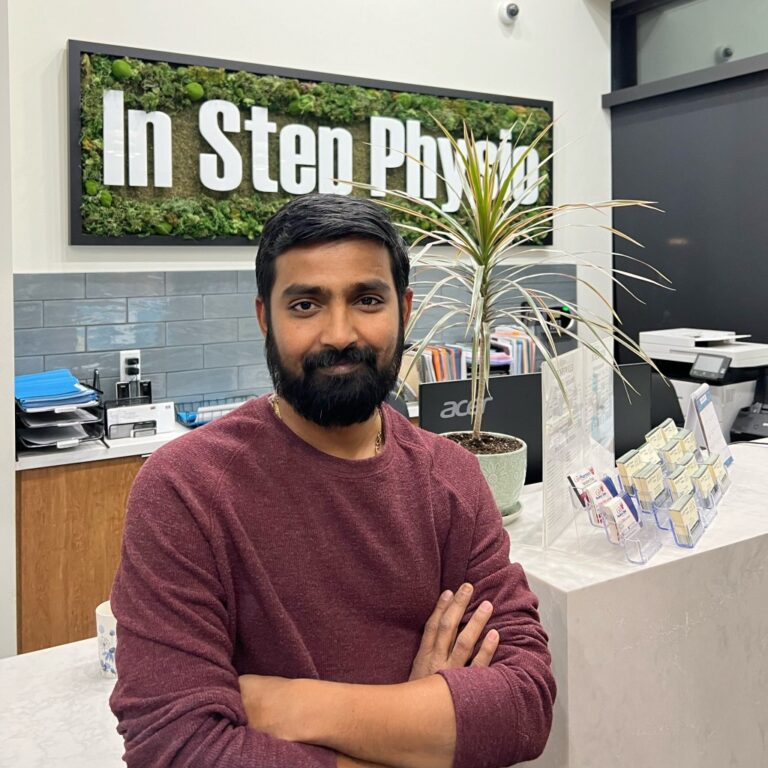
Our team is here to answer your questions and get you moving again
- Address - 10667 113 St NW, Edmonton, AB T5H 3H6
- Phone - (587) 409-1754
- Email - info@instepphysio.ca
- Business Hours - Mon – Fri: 8 am – 8 pm
- Business Hours - Sat: 8 am – 4 pm